Sitting a GCSE is stressful enough without last‑minute confusion over what’s allowed and what isn’t. 2026’s exam season will follow updated Joint Council for Qualifications (JCQ) guidelines, and exam centres across the UK must enforce them. Understanding these rules ahead of time keeps you calm on the day and protects your grades. In this post we’ll break down everything from arrival times to banned items, contingency days and what to do if something goes wrong.
Exam rules aren’t there to catch you out – they ensure fairness and prevent malpractice. Penalties can be severe: using a mobile phone, smart watch or notes can lead to disqualification from all exams, not just the one you’re taking. Even simple mistakes such as talking or whispering to a friend can be construed as cheating. Getting familiar with the rules means you’ll avoid these pitfalls and walk into the exam room with confidence.
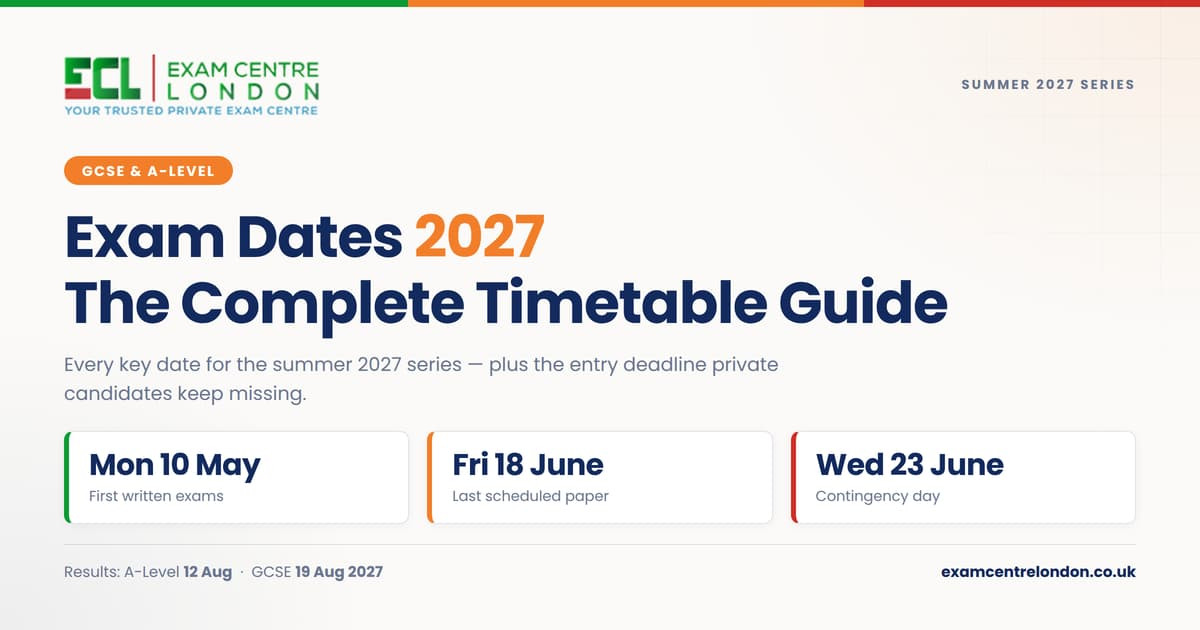
The GCSE exam window usually runs from mid‑May to mid‑June. There are two compulsory contingency sessions in 2026: the morning and afternoon of 24 June 2026. You must be available then in case an exam has to be rescheduled due to a national disruption.
Exam start times are typically 9 am for morning papers and 1.30 pm for afternoon papers (local time) as standard across many centres (your timetable should confirm this). Plan to arrive at least 30 minutes early so you’re calm, can find your seat and have time for any last‑minute instructions. If you’re late, exam centres may still let you in if it’s within the first hour, but this is at their discretion – contact your exams officer as soon as possible if there’s a problem.
Life happens. If you wake up unwell or there’s an emergency, phone the centre immediately. They will advise whether you should still attend or be eligible for special consideration. If you arrive after the paper has started, let an invigilator know; they will escort you into the room without disturbing others. Remember, you must stay under formal exam conditions until you leave.
Use this checklist when packing your bag the night before:
Photo ID or candidate card – Most centres issue a card with your candidate number and photo; you’ll need to place it on your desk.
Two black ink pens – JCQ insists on black ink because exam papers are scanned for marking; blue pens aren’t acceptable.
Pencils and eraser – For diagrams or rough work.
An approved calculator – Only when the paper permits one; ensure it’s allowed and clear of stored data.
Ruler, protractor and compass – For maths and science papers.
Clear pencil case – JCQ states it must be transparent so invigilators can see its contents.
Clear water bottle without a label – Staying hydrated is permitted, but the bottle must be completely transparent and label‑free.
Write the date, time and location of each exam into a planner so you never forget where you need to be. Also note the name and contact number of the exams officer in case there’s an emergency.
The list of prohibited items has grown as technology has evolved. According to JCQ:
Phones of any type – must be switched off and left in your bag; possessing one in an exam can result in disqualification.
Watches – All watches (analogue, digital or smart) are banned; clocks will be visible in the room.
Revision notes or books – Even if you aren’t using them, having notes on your person is considered unauthorised material.
Smart devices – This includes smart glasses, earbuds, iPods or any tablet.
Food – Only water is permitted; no snacks are allowed in the exam room for hygiene and fairness reasons (check with your centre if you have a medical exemption).
Other items to leave at home include highlighters (use them only on question paper not answer scripts), Tippex, dictionaries (unless specified), and any calculator lids or instruction leaflets.
When you arrive, you’ll be asked to line up and enter in silence. Once you cross the threshold, formal exam conditions apply – no talking, gestures or eye contact with other candidates. An invigilator will direct you to your seat, which is pre‑assigned by candidate number. On your desk you should find:
The name of your centre and subject.
The paper code.
Start and finish times.
Listen carefully to all instructions and only write your name and candidate number on the answer booklet when told. If you need extra paper, raise your hand and wait for the invigilator. If you feel unwell or need to use the toilet, raise your hand and an invigilator will escort you.
At the end of the paper, remain seated until an invigilator collects your script. You may be dismissed row by row; leave the room silently so you don’t disturb candidates who may still be working.
Maintaining silence is critical. Talking to another candidate, even whispering or commenting on the paper, is prohibited. Do not share calculators or stationery. Make sure your calculator memory is cleared and any lids are removed. Any breach of rules, however minor, must be reported by invigilators and can lead to warnings, loss of marks or disqualification.
Candidates with additional needs (e.g., extra time, rest breaks, or use of a word processor) must have these approved in advance by the school’s Special Educational Needs Coordinator (SENCo). If you’re entitled to rest breaks or have a timetable clash, exam officers will arrange supervision between papers to prevent communication with peers. The City of Peterborough Academy’s handbook emphasises that for students with multiple papers in one session, you may have a supervised break rather than sitting both papers simultaneously.
If you have a clash that results in one paper running into the next session, you might be required to remain under supervision (no phone or internet access) to preserve exam security. Plan for this by bringing a packed lunch and revision materials for non‑exam subjects.
Pack your bag the night before – Use the checklist above and avoid last‑minute panic.
Eat a balanced breakfast – Fuel your brain; avoid heavy meals that can make you sluggish.
Dress comfortably – There’s no strict dress code, but choose layers so you’re not distracted by temperature.
Arrive early – Aim for 30 minutes before the scheduled start to settle any nerves.
Warm up mentally – Read a short passage or practise a few maths questions to get your brain in gear.
Stay positive – Anxiety is normal. Remind yourself of the preparation you’ve done.
Forgot your candidate card? Speak to the exams officer; they can verify your identity.
Calculator stops working? Raise your hand; they may have spares. Always bring extra batteries.
Fire alarm? Listen to invigilators; you may be evacuated under exam conditions. Do not talk or turn over your paper. You’ll resume once it’s safe.
You feel ill? Tell an invigilator – they may let you leave temporarily. An incident report will record the interruption.
When you leave the exam room, resist the urge to discuss questions with friends if there are others still to sit the paper at a later time. Some candidates may have timetable clashes and will take the exam later that day; sharing details could constitute malpractice. Take a break, hydrate and prepare for your next paper.
Understanding the rules is as important as revising content. By following JCQ guidance you protect yourself from avoidable penalties and create a calm, focussed environment where you can perform at your best.
For further reading, explore the following resources:
JCQ “Preparing to sit your exams” booklet – Official checklist and rules.
Past papers and practice resources on Merit Study Resources to familiarise yourself with typical question formats.
Revision plans and stress‑management tips on Merit Tutors to help structure your final weeks.
Above all, stay organised, ask for support when you need it and remember that exam rules exist to protect you and your qualifications.
Recent Posts
Categories
Tags




 Updated 04-April-2026